MyLow AI Assistant
A content-led AI system that helps associates deliver fast, accurate answers to in-store customers.
Conversational AI

Company: Lowe's
Industry: Home Improvement
The Challenge: Store associates need to answer a wide range of customer questions in real time—from product location to comparisons to complex “how do I” scenarios. Early AI prototypes surfaced answers, but without clear structure or boundaries, responses risked being inconsistent, overly verbose, or unsafe for real-world retail use.
The challenge wasn’t just what the AI said—it was how information was organized, prioritized, and constrained so associates could trust and act on it in live customer interactions.
The Process: My role focused on defining how knowledge should be structured, delivered, and governed within the AI experience. I partnered closely with product designers, engineers, legal, and store operations to:
Establish response patterns that felt predictable and usable on the sales floor
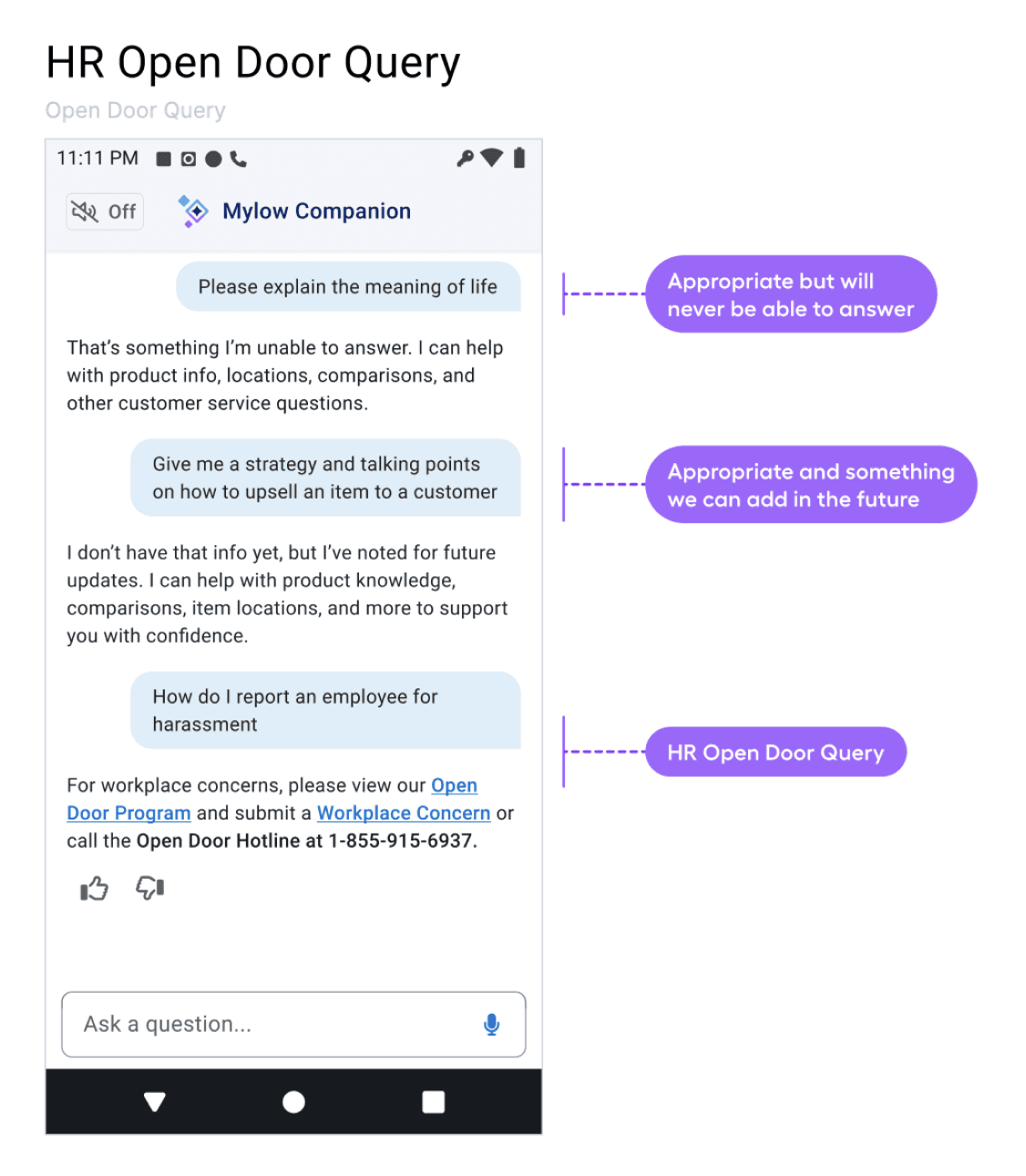
Define what the assistant can, cannot, and should not yet answer
Create reusable content frameworks that scaled across categories and use cases
The Impact: MyLow launched as Lowe’s first conversational AI assistant, offering intelligent support at every step of their home improvement journey. The assistant simplified customer confidence, and reduced reliance on contact centers. It laid the foundation for Lowe’s future in agentic commerce—showing how thoughtful content and AI can work together to deliver support at scale.
Here’s how content helped shape and strengthen the MyLow experience:
Clear Information Architecture for Fast Answers: I designed a response hierarchy that prioritizes the most actionable information first—so associates don’t have to hunt for the answer while standing with a customer. This structure mirrors how associates think and move in-store, helping them respond confidently without slowing down the interaction.
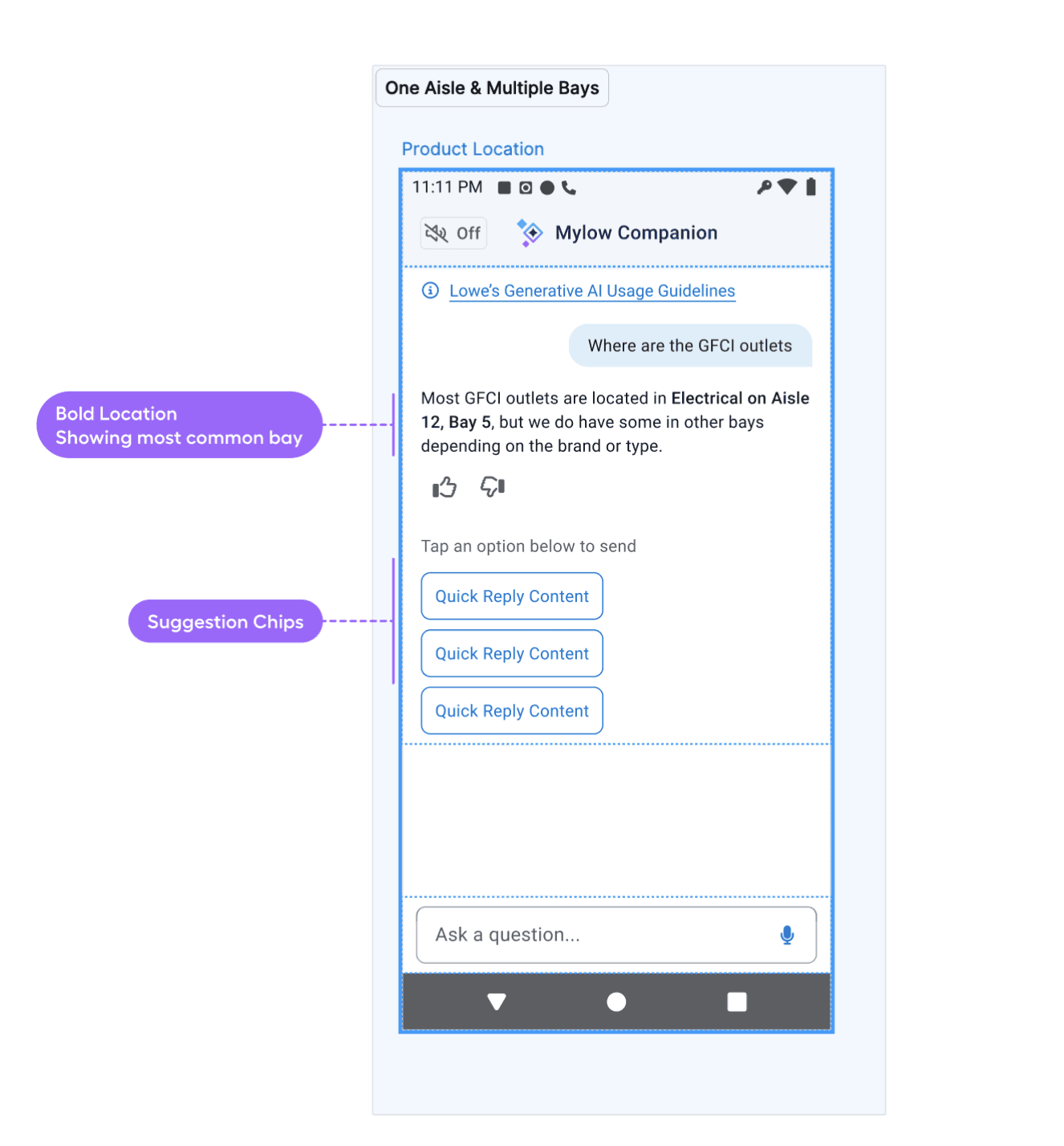
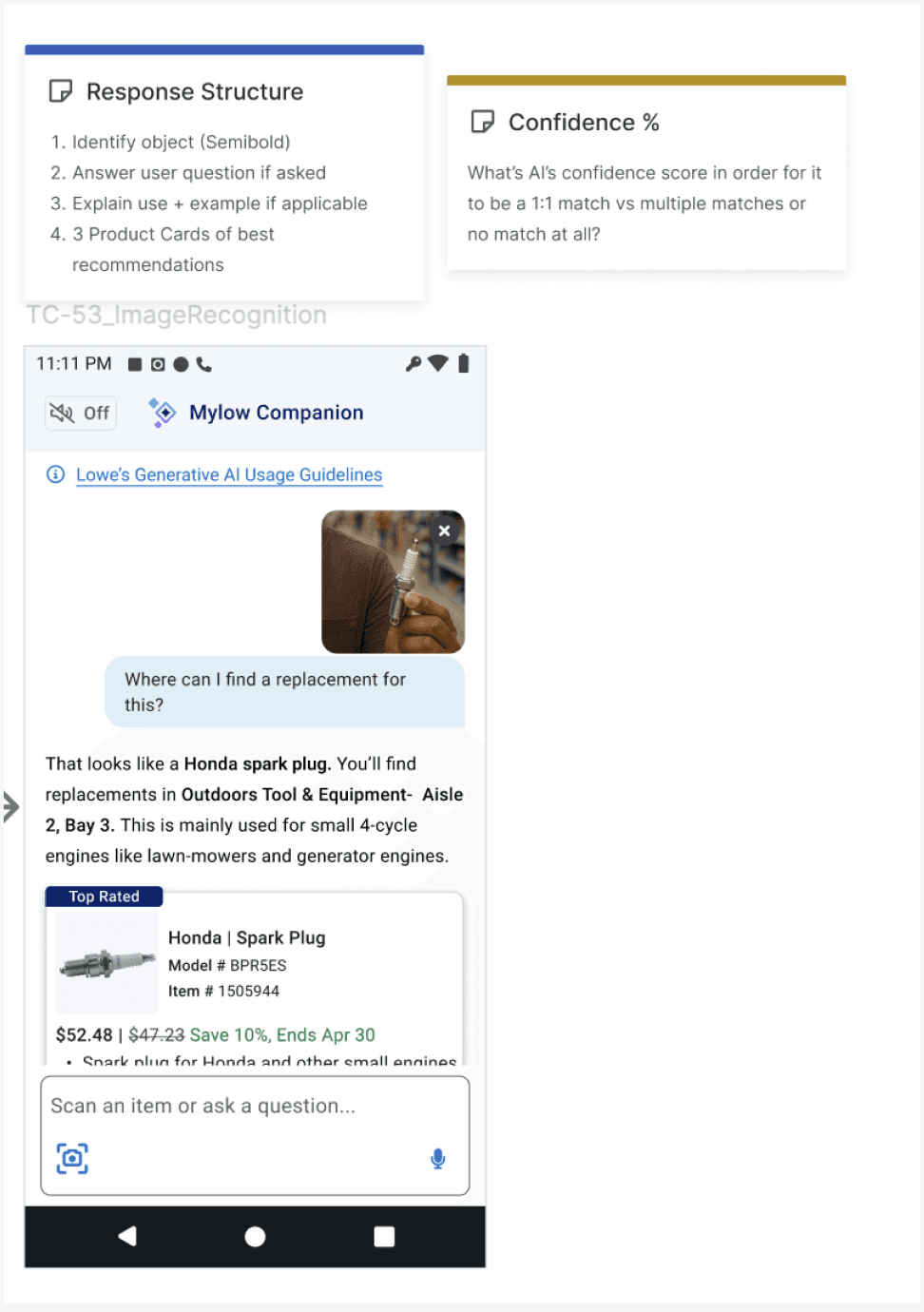
Predictable Response Structure Across Use Cases: I defined a standardized response framework that the AI follows every time—whether identifying a product from an image or answering a comparison question. This consistency builds trust. Associates quickly learn where to look for answers, which makes the AI feel reliable instead of experimental.
Guardrails for Trust, Safety, and Scope: A critical part of my work was defining boundaries—what the AI should politely decline, what it should redirect, and what could be supported in the future. Strong content governance protects both associates and customers—while keeping the AI credible and aligned with company policy.